
Flying Carpet Festival 2026 Schedule
August 21 - September 1, 2026
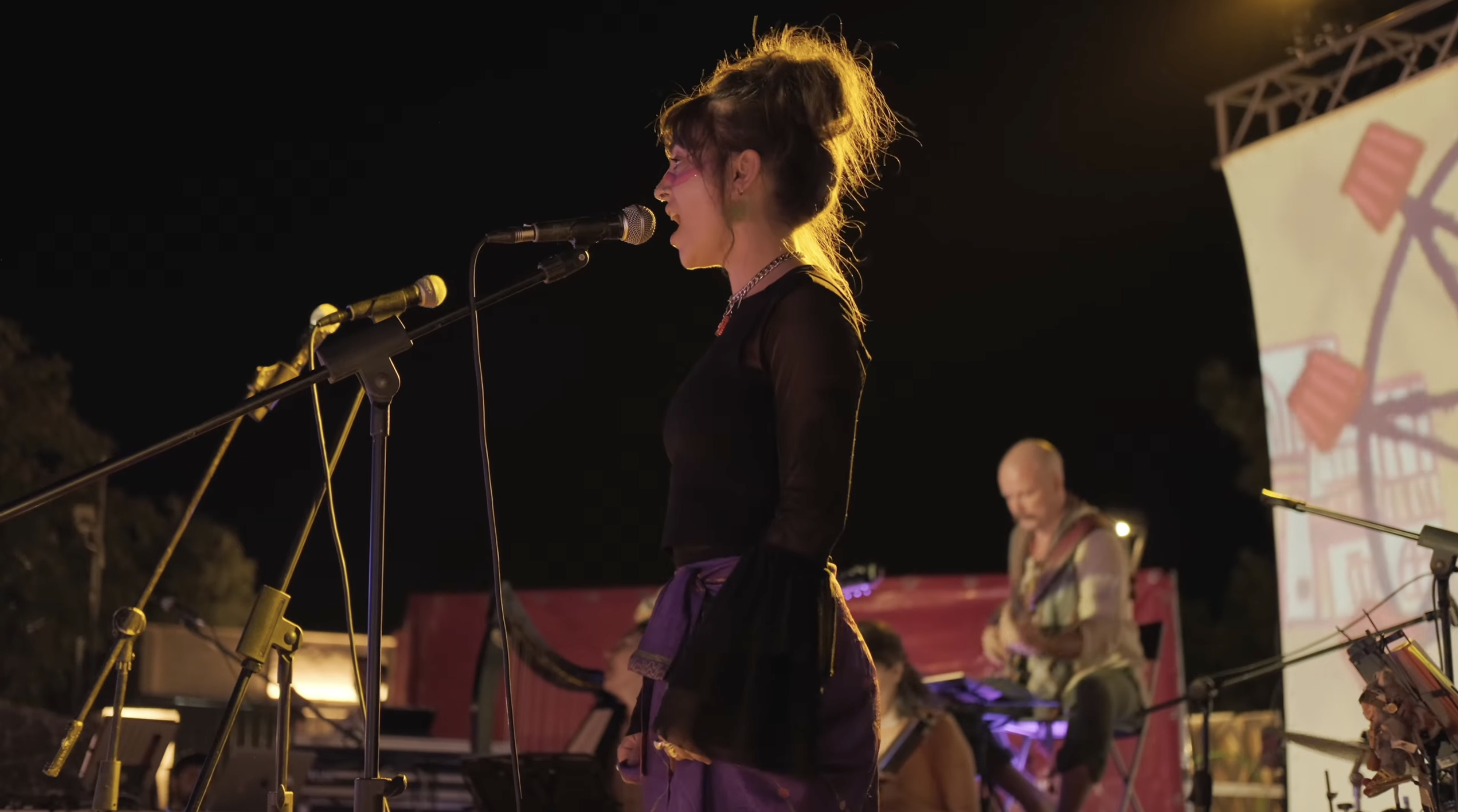
We are thrilled to announce that the Flying Carpet Festival is returning for its 2026 edition! From August 21st to September 1st, 2026, the festival will weave its magic across 10 distinct locations throughout the beautiful Mardin province, situated near the Turkish-Syrian border. This year’s vibrant program features 8 all-day community activities and performances, alongside 2 exclusive, high-energy Jam Nights hosted in two of Mardin's most breathtaking historic locations. Join us for an unforgettable journey of music, art, and cultural exchange in the heart of Mesopotamia!
Daily Schedule:
11:00 - 13:00 Workshops Group 1
14:00 - 16:00 Workshops Group 2
16:30 - 18:00 Workshops Group 3
18:00 - 19:00 Parade With Artists And Children
19:00 - 21:30 Large Storytelling Experience/Show
Workshops Summary:
Flying Hats — Naghmeh Forouzan: Children create imaginative sculptural hats using cardboard, recycled materials, glue, and optional paint.
Starry Skies — Tonka Uzu: Children paint rotating day-and-night sky scenes on paper plates with planets or landscapes.
What is Essential is Invisible to the Eye / Gerçeğin Mayası Gözle Görülmez — Bilge Emir: Children explore drawing and reflection through a creative activity inspired by the idea that what matters most is not always visible.
Juggling & Movement — Roxana Küwen: An accessible movement workshop using juggling games and exercises for all ages and bodies.
Flying Carpet’s Galaxy — Aida Noshali: Children color pre-printed planet sheets to create a playful galaxy-themed artwork.
Borrowed Head — Mana Tashakorinia: Children and youth make cardboard masks using paper, glue, tape, and supervised cutting tools.
Face Painting — Hanna Nikalayeva, Darya Beliayeva, and Palina Rusakovich: Artists offer creative face-painting designs using materials they provide themselves.
Rhythm Workshop — Aaron Kierbel: Participants join a group music-making activity using available percussion instruments.
Mural Workshop — Sara Shoghi: Participants help create murals inspired by The Little Prince across festival locations.
Little Prince Craft — Simin Asdaghi: Young children make a collage-style Little Prince image using torn colored paper and glue.
Fox Origami — Simin Asdaghi: Children learn to fold colored paper into a fox origami figure.
Festival Schedule
(CLICK ON EVERY DAY)
-
Arrival of the artists in Mardin
Old Mardin (Eski Mardin) is a breathtaking historical city center dramatically perched on a steep hillside overlooking the vast plains of northern Mesopotamia. Celebrated for its unique, terraced Artuqid-era architecture, the city is constructed out of locally quarried golden limestone, giving it a striking monochromatic appearance that glows in the sunlight. Its layout consists of a labyrinth of narrow, vehicle-free stepped alleyways (abbara) where donkeys remain a primary form of transport. Crowned by a historic hilltop citadel, Old Mardin is a living museum and UNESCO World Heritage candidate that preserves an ancient, multicultural fabric where Syriac Orthodox churches, historic Islamic madrasas, and bustling traditional bazaars stand side-by-side, serving as an iconic symbol of tolerance, deep history, and architectural marvel.
-
Rehearsals
Between August 21 and 22, the artists of the Flying Carpet Festival undergo a rigorous, intense schedule of all-day rehearsals to mount a large-scale, immersive storytelling production. This year's performance focuses on Antoine de Saint-Exupéry’s timeless masterpiece, The Little Prince, seamlessly weaving together live music, theatrical storytelling, circus arts, contemporary dance, dynamic visual projections, and intricate lighting design. Because the production brings together diverse creatives under an ambitious, multidisciplinary framework, these grueling training days are vital for rapidly fostering artistic unity, synchronizing complex technical cues, and building trust among the performers. Ultimately, this brief but exhausting rehearsal period transcends mere technical preparation; it transforms the collective effort into a deeply personal artistic journey for the participants while fine-tuning a massive, spellbinding production that will tour regional communities in the coming days.
-
Mardin, İstasyonThe Istasyon Neighborhood serves as a prominent focal point for Mardin’s changing demographics, particularly regarding the city’s integration of Syrian refugees. Like the broader Mardin province—which is uniquely characterized by its historic, multi-ethnic tapestry of Kurds, Arabs, Turks, and Assyrians—Istasyon has evolved into a densely populated, multicultural melting pot. Following the outbreak of the Syrian conflict, thousands of displaced families crossed the border and primarily settled within this lower-lying urban neighborhood. This influx has added a vibrant yet socio-economically complex layer to the area, where a young demographic of Syrian children now grow up learning Turkish alongside their native Arabic or Kurdish, navigating local schools and integrating into the regional workforce. This rapid demographic shift has presented both community resilience and structural challenges, turning Istasyon into a critical hub for international humanitarian support, public health initiatives, and cultural adaptation as local residents and new arrivals navigate cohabitation in modern Mardin.
-
Midyat, Festival Alanı
Nestled in southeastern Türkiye’s Mardin Province, Midyat is an ancient open-air museum renowned for its mesmerizing honey-colored limestone architecture and rich multicultural heritage. Situated at the heart of historical Upper Mesopotamia, the town features a maze of narrow cobblestone alleyways lined with intricately carved stone mansions (konaks), historic mosques, and ancient Syriac Orthodox churches whose bell towers share the skyline with soaring minarets. Midyat has long served as a spiritual and cultural crossroads where Assyrian Christian, Kurdish, Arab, and Turkish traditions blend harmoniously, exemplified nearby by the sacred 4th-century Mor Gabriel Monastery. Beyond its architectural grandeur, the town is world-famous for its master artisans who practice Telkari—the painstaking craft of weaving delicate silver threads into intricate jewelry—making Midyat a captivating blend of living history, timeless craftsmanship, and mesmeric charm.
-
Derik, Merkez (Center)
Derik Merkez is the administrative and commercial heart of the Derik district, nestled on the slopes of the Mazıdağı mountains in the western part of the Mardin province. Historically celebrated for its lush olive groves and the production of high-quality local olive oil, the town center reflects the rich cultural and multi-ethnic tapestry characteristic of the upper Mesopotamian region. The demographics of Derik Merkez are primarily composed of Kurdish and Arab residents, along with a deeply rooted, though historically diminished, Armenian community that has left a lasting impact on the local cultural heritage. In recent years, the central district has also become home to displaced Syrian families, who have integrated into the local economy and social fabric. As a bustling hub, Derik Merkez serves as the focal point for local governance, daily commerce, and community life, balancing its deep agricultural traditions with the socio-economic realities of a evolving, multicultural population.
-
Gökçe, Merkez (Center)
Gökçe (historically known as Selah or Salah) is a large, populous neighborhood located within the central Artuklu district of the Mardin province. Situated on the flat agricultural plains roughly midway between the city center of Mardin and the neighboring district of Kızıltepe, it transitioned from a standalone town status to an urban neighborhood during local government reorganizations. Economically, the area is deeply tied to the fertile Mesopotamian plains, with agriculture serving as a primary livelihood for its rapidly growing population of over 10,000 residents. Demographically, Gökçe reflects the regional blend of Arabic and Kurdish cultures typical of the Mardin-Kızıltepe highway corridor, and its affordable cost of living has made it an expanding peripheral residential zone that balances traditional rural ties with growing urban infrastructure demands.
-
Ortaköy, Çocuk Parkı (Children's Park)
Ortaköy (locally known also as Horren or Girik) is a large, vibrant neighborhood located in the Artuklu central district of the Mardin province, positioned about 11 kilometers south-southeast of the city center. Before local administrative restructuring transformed it into an urban neighborhood, it held the status of a distinct town, and it currently supports a substantial, growing population of over 10,000 residents. The community boasts deep historical roots, sitting near ancient migration and trade corridors (historically associated with the old King's Road), and features the Gil Harrin mound (höyük), which contains archaeological traces dating back to the Bronze Age and the ancient Assyrian period. Today, Ortaköy reflects a rich cultural mix predominantly populated by Kurds and Arabs from local regional tribes. It serves as a bustling residential and socio-economic hub along the route toward Nusaybin, striking a balance between local heritage—such as regional culinary traditions like the Kiliçe "life pastry"—and modern suburban growth.
-
Mardin, JAM Night
Kırklar Kilisesi (originally named Mor Behnam and His Sister Saro Church) is a highly significant 6th-century Syriac Orthodox church located in the historical center of Mardin. Built around 569 AD, the structure features classic mid-Mezopotamian Christian architecture with exquisite stone masonry, fine relief carvings, and arched courtyards. It became known as Kırklar (Forty) Kilisesi in the 12th century when the relics of the Forty Martyrs of Sebaste were brought to the sanctuary. Serving historically as a primary spiritual patriarchate and education center for the region's Syriac community, the church remains an active house of worship today, drawing visitors from around the world as a profound symbol of Mardin’s long-standing, multicultural, and multi-faith heritage.
-
Diyarbakır, Çınar
Çınar is a sizable district in the southeastern part of the Diyarbakır province, spanning a large, predominantly flat terrain of nearly 2,000 square kilometers that borders the Mardin province to its south. Historically rooted as far back as the Paleolithic Age, the district is most famous for housing Zerzevan Castle (Zerzevan Kalesi), a vital Roman-era military garrison and settlement that contains an internationally significant subterranean Mithras temple. Today, Çınar's population of over 76,000 residents is predominantly Kurdish, alongside local Arab communities, with a demographic and social lifestyle deeply tied to regional agriculture and small-scale livestock farming. Serving as a crucial geographic and cultural bridge between the metropolitan hub of Diyarbakır and the ancient lands of Mardin, the district balances a rich archaeological heritage with the rural socioeconomic rhythms of Upper Mesopotamia.
-
Midyat, Estel Köşk Meydanı
Nestled in southeastern Türkiye’s Mardin Province, Midyat is an ancient open-air museum renowned for its mesmerizing honey-colored limestone architecture and rich multicultural heritage. Situated at the heart of historical Upper Mesopotamia, the town features a maze of narrow cobblestone alleyways lined with intricately carved stone mansions (konaks), historic mosques, and ancient Syriac Orthodox churches whose bell towers share the skyline with soaring minarets. Midyat has long served as a spiritual and cultural crossroads where Assyrian Christian, Kurdish, Arab, and Turkish traditions blend harmoniously, exemplified nearby by the sacred 4th-century Mor Gabriel Monastery. Beyond its architectural grandeur, the town is world-famous for its master artisans who practice Telkari—the painstaking craft of weaving delicate silver threads into intricate jewelry—making Midyat a captivating blend of living history, timeless craftsmanship, and mesmeric charm.
-
Nusaybin, Mitanni Cultural Center
Nusaybin (historically known as Nisibis) is a major border district in the southeastern part of the Mardin province, directly situated on the international boundary with Syria, facing the Syrian city of Al-Qamishli. Renowned for its extraordinary historical depth, Nusaybin was a prominent center of early Christianity, ancient philosophy, and trade in Upper Mesopotamia, famously hosting the School of Nisibis—often regarded as one of the world's earliest universities—alongside the landmark 4th-century Church of Saint Jacob (Mor Yakup). Today, it features a bustling urban population of over 115,000 residents, primarily composed of Kurdish and Arab communities, along with a deeply rooted Assyrian heritage. As a critical economic gateway positioned along historic trade pathways and modern international transit routes, the district balances its legacy as a cradle of multicultural scholarship with the dynamic socioeconomic realities of a vital border city.
-
Mardin, JAM Night
The Mardin Bazaar (Mardin Çarşısı), weaving through the narrow, stepped alleyways of the historical old town, is an ancient commercial epicenter that serves as the sensory heartbeat of the city. Composed of specialized interconnected markets—such as the historic Sipahiler Bazaar, the Coppersmiths' Bazaar (Bakırcılar Çarşısı), and the Hasan Ammar Bazaar—this sprawling marketplace is heavily lined with traditional vaulted stone shops that have stood for centuries. As visitors navigate its labyrinthine paths, they are greeted by an intense blend of sights and aromas, from heaps of vibrant regional spices and locally harvested blue almonds to artisanal Syriac wine, handmade olive oil soaps, and intricate filigree (telkari) silver jewelry. Beyond its economic role, the bazaar remains a vital social landscape where Kurdish, Arab, Turkish, and Assyrian merchants interact daily, preserving the authentic trade customs, multi-ethnic dynamics, and timeless entrepreneurial spirit of Upper Mesopotamia.
-
Departure of the artists from Mardin